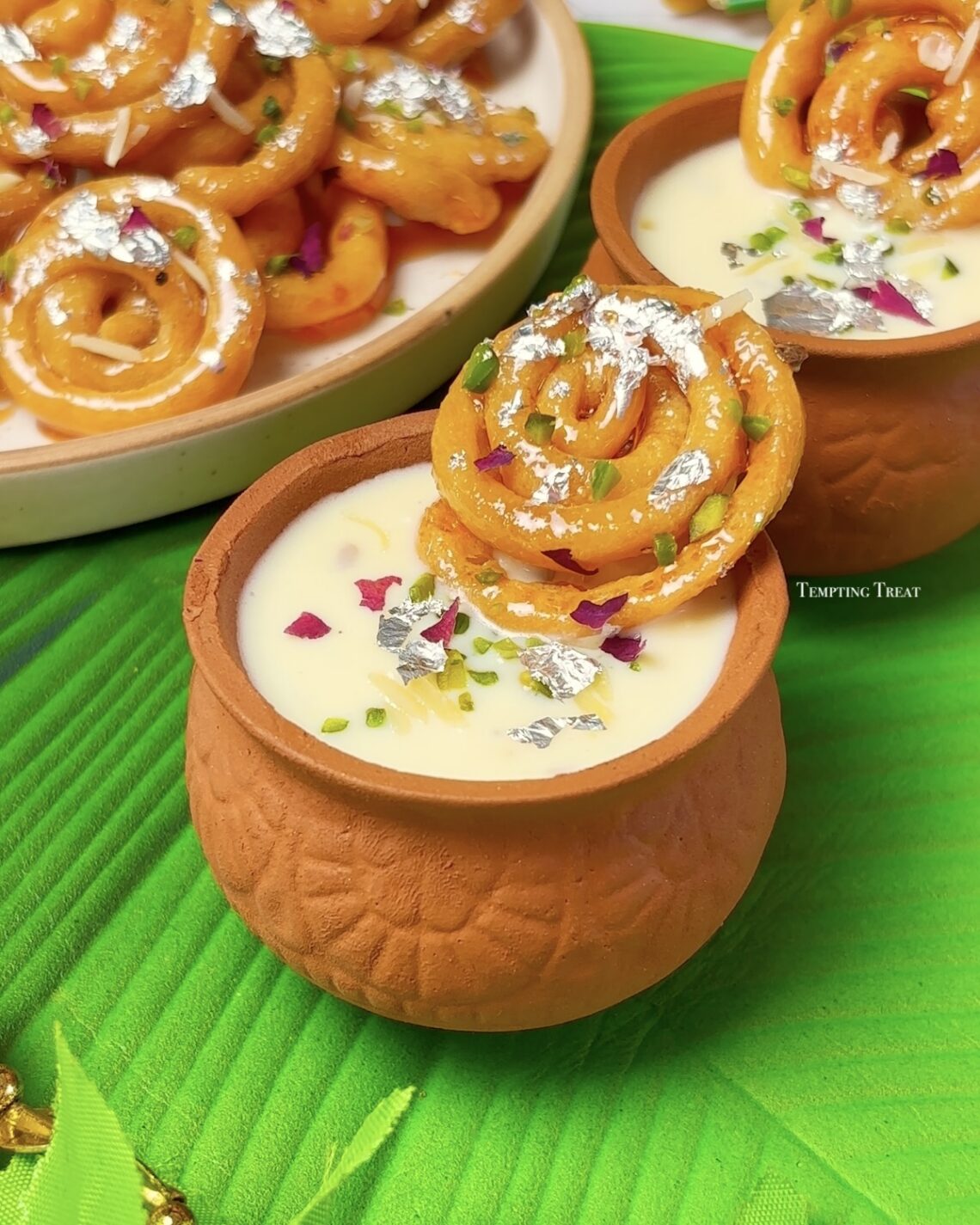
The Ultimate 10-Minute Instant Rabdi Recipe (Foolproof, Rich & Unforgettable)
10-Minute Instant Rabdi Recipe (No Bread, No Condensed Milk – Pure Halwai-Style Richness!)
Traditional rabdi is pure magic, except for one catch, slow-reducing milk on the stove for over an hour while constantly scraping the sides. While many quick recipes rely on bread crumbs or cornflour to fake that thick consistency, you don’t need any fillers to get authentic, grainy (danedar) texture in minutes.
This 10-Minute Instant Rabdi recipe skips the bread completely and uses a rich combination of milk powder and crumbled khoya (mawa) to deliver real halwai-style indulgence in a fraction of the time. Served chilled in earthen bowls (matkis) with hot, crispy jalebis on the side, it is the ultimate festive showstopper.
Why This Instant Rabdi Recipe Works So Well
Zero Bread or Fillers: Gets its body and creamy richness purely from dairy – no bread crumbs, condensed milk, or thickeners needed.
Ready in 10 Minutes: Cuts down traditional cooking time dramatically without sacrificing flavor.
Authentic Danedar Texture: Crumbled khoya melts into the simmering milk to create those classic, rich milk solids in every spoonful.
Party-Ready Yield: Makes approximately 6 to 7 servings (depending on your bowl size), making it ideal for parties.
Watch the Recipe Video Below!
Stay Inspired! If you enjoyed this recipe, please subscribe to my YouTube channel. Don’t forget to click the bell icon so you’re the first to know when a fresh new video drops! 🔔
Craving more sweet treats? Browse our full collection of Easy Dessert Recipes for quick, foolproof indulgences you can whip up in minutes.
Ingredients You’ll Need
1 litre Full-fat Milk (Full-cream milk gives the best body and richness)
¾ cup Milk Powder
200g Khoya / Mawa (Crumbled or grated for quick, even melting)
¼ cup Sugar (Adjust to taste, khoya adds natural sweetness)
¼ tsp Green Cardamom Powder (Freshly ground elaichi gives the best aroma)
2 tbsp Chopped Nuts (pistachios & almonds)
For Garnish: Sliced pistachios, almonds, dried rose petals, chandi vark (edible silver leaf), and crispy jalebis for serving
Step-by-Step Instructions
- Make a Smooth Milk Powder Slurry: In a small bowl, whisk the milk powder with a splash of milk until completely smooth and lump-free. Setting this aside first prevents lumps from forming when it hits the hot pot.
- Boil the Milk: Pour the remaining full-fat milk into a heavy-bottomed pot or wide kadhai and bring it to a gentle boil over medium heat.
- Add the Richness: Lower the flame to medium-low. Stir in the milk powder slurry, crumbled khoya, and sugar, mixing thoroughly so the khoya incorporates evenly into the milk.
- Simmer Until Thick: Cook on a medium-low flame for 6 to 8 minutes, stirring continuously so the bottom doesn’t scorch. Keep cooking until the sugar dissolves completely and the rabdi reaches a rich, creamy consistency that coats the back of a spoon.
- Flavor & Finish: Turn off the heat and stir in the green cardamom powder and chopped nuts.
- Chill Before Serving: Allow the rabdi to cool down to room temperature, then transfer it to the refrigerator until thoroughly chilled. (Note: Rabdi thickens further as it cools, so avoid over-reducing it on the stove.)
- Garnish & Serve: Spoon the chilled rabdi into individual serving bowls or earthen matkis. Top with sliced pistachios, almonds, dried rose petals, and a touch of chandi vark, and serve alongside hot, crispy jalebis!
Helpful Tips & Storage
Khoya Substitution: Out of khoya? Increase the milk powder slightly and add 2-3 tablespoons of fresh malai or heavy cream, or swap in crumbled paneer for a similar grainy texture.
Keep Stirring: Because khoya and milk powder are concentrated dairy solids, continuous stirring over medium-low heat ensures a velvety finish without sticking to the base of the pan.
Make-Ahead Friendly: You can prepare this rabdi 1 to 2 days in advance and store it in an airtight container in the refrigerator. Just add the chandi vark and nuts right before serving so everything looks fresh.
Don’t Panic! Instant Rabdi Recipe Fixes & FAQs
1. Why did lumps form in my rabdi?
Lumps usually happen when dry milk powder hits hot milk directly or if the khoya isn’t crumbled finely enough. Always whisk the milk powder into a smooth slurry with lukewarm or room-temperature milk before adding it to the pot, and grate or finely crumble the khoya so it melts evenly. If lumps still form, whisk briskly off the heat or pulse briefly with a hand blender.
2. My rabdi looks too thin after 8 minutes—should I keep cooking it?
Not necessarily! Rabdi thickens significantly as it cools down to room temperature and chills in the fridge. Turn off the heat once it reaches a light custard-like consistency that coats the back of a spoon. If it still looks watery after chilling, return it to a wide pan and simmer on low for 3-4 more minutes, or whisk in an extra tablespoon of milk powder slurry.
3. Why did my rabdi turn out too thick or grainy after chilling?
Because khoya and milk powder are concentrated dairy solids, over-reducing the mixture on the stove can make it set like basundi fudge or kalakand once refrigerated. To fix a batch that’s too thick, simply stir in 2-4 tablespoons of warm full-fat milk until it loosens back into a creamy, scoopable consistency.
4. Why did the milk stick or scorch at the bottom of the pot?
High heat and infrequent stirring cause milk solids and khoya to settle and burn at the base. Always use a heavy-bottomed pot or wide kadhai, keep the flame strictly on medium-low once the khoya and milk powder are added, and stir continuously while scraping the bottom and sides. (Tip: If it slightly scorches, immediately transfer the top rabdi into a clean bowl without scraping the burnt bottom layer.)
5. Why did my rabdi curdle while simmering?
Curdling happens if the milk wasn’t completely fresh, if acidic cardamom pods or saffron were steeped in slightly sour milk, or if the pot had soap residue. Always use fresh full-fat milk and bring it to a gentle boil first before adding the khoya and sugar.
6. Can I make this without khoya or milk powder?
- No Khoya: Increase the milk powder to 1 cup and add 2–3 tablespoons of fresh malai (or heavy cream) for richness.
- No Milk Powder: Increase the crumbled khoya to 250–300g and simmer for an extra 4–5 minutes until the milk reduces slightly.
7. How do I store leftovers, and how long does it stay fresh?
Store cooled rabdi in an airtight glass container in the refrigerator for up to 3 days. Hold off on adding chandi vark (silver leaf) and extra nuts until right before serving so they stay crisp and visually fresh.
Love it? Print it or Pin it! 📌
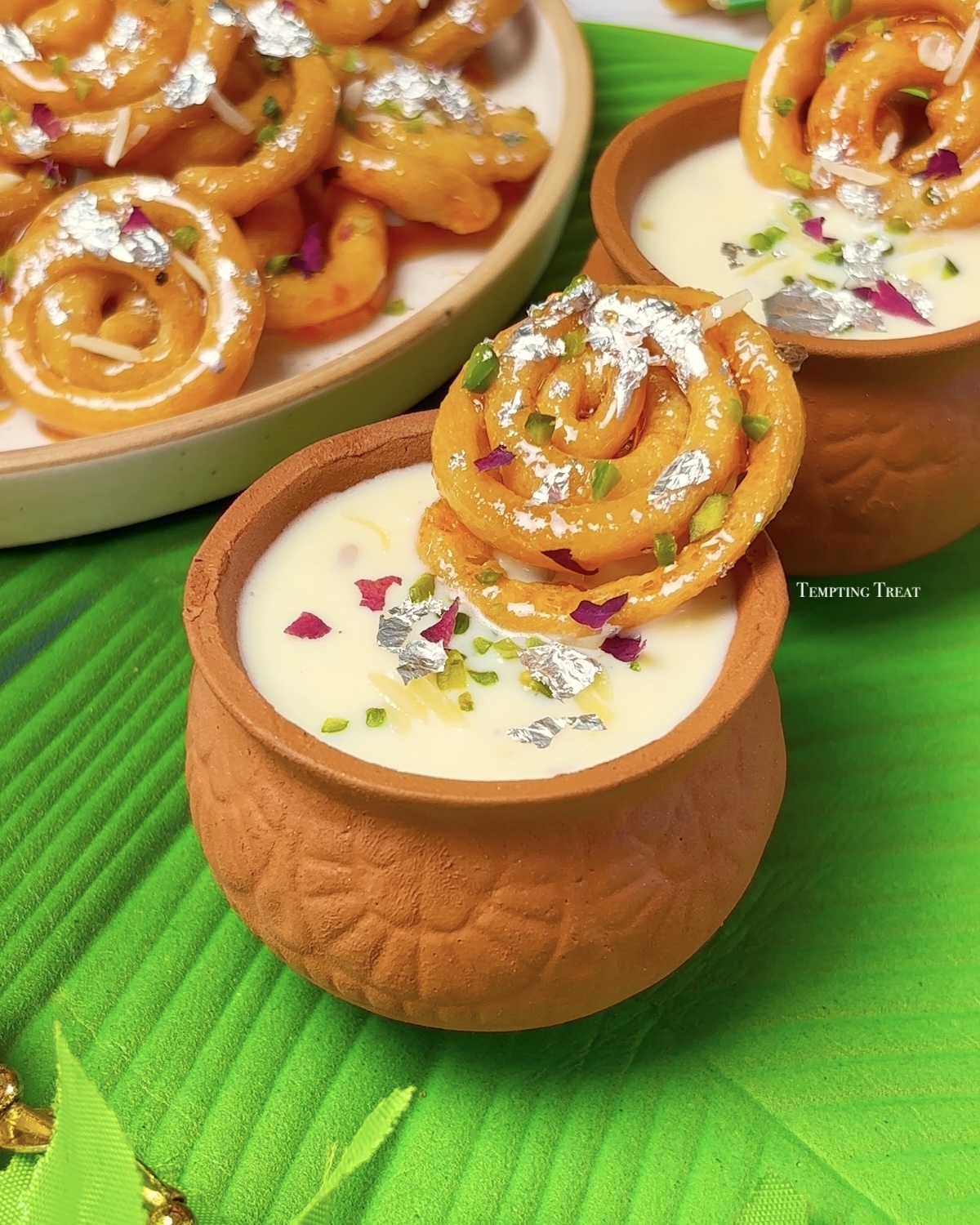

10-Minute Instant Rabdi (No Bread!)
Ingredients
Method
- In a small bowl, whisk the milk powder with a splash of milk until completely smooth and lump-free.
- Bring the rest of the milk to a boil in a heavy-bottomed pot over medium heat.
- Lower the heat, then stir in the milk powder slurry, crumbled khoya, and sugar. Mix well.
- Cook on medium-low flame for 6-8 minutes, stirring continuously, until the sugar melts and the rabri reaches a rich, thick consistency.
- Add the cardamom powder and chopped nuts. Mix well and turn off the heat.
- Allow it to cool to room temperature, then refrigerate until chilled.
- Transfer to serving bowls, garnish with pistachios, almonds, rose petals, and chandi vark, and serve alongside hot, crispy jalebis!
I can’t wait to see your creations! If you whip up this recipe, snap a photo and tag me @temptingtreat or use #temptingtreat on Instagram so I can feature you.
Have questions or feedback? Drop a comment below – I love hearing from you!
Happy Cooking! ✨
(रबड़ी कैसे बनाते हैं, rabri recipe, Diwali Recipes, Easy Desserts, Jalebi Rabri, Instant Rabri Recipe, 10 Minute Rabri, Diwali Sweet Recipes, Halwai Style Rabri at Home, Easy Rabri Without Bread, Quick Indian Mithai)

How to Make Peda at Home in 10 Mins
You May Also Like

Koraishutir Puli Pitha | Bengali Pitha Recipe

Chinese-Style Oats Khichdi Recipe
